
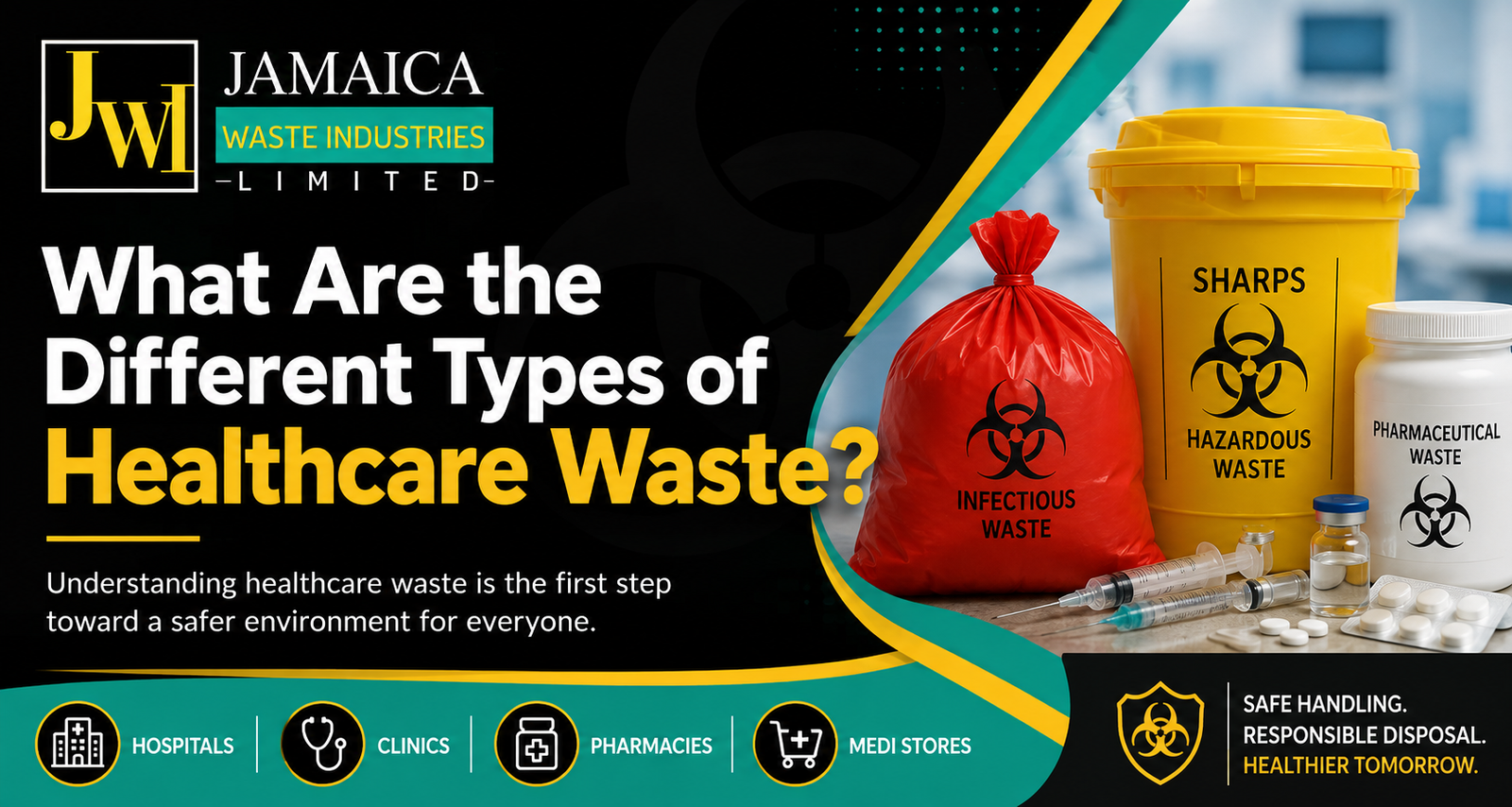
What Are the Different Types of Healthcare Waste?
Healthcare facilities play an essential role in protecting and improving public health. However, hospitals, clinics, laboratories, dental practices, nursing homes, and other healthcare facilities also generate different kinds of waste every day. Some of this waste is harmless, while other waste can be infectious, toxic, or hazardous if it is not handled correctly.
Understanding the types of healthcare waste is important for healthcare workers, facility managers, patients, and waste management professionals. Proper healthcare waste management helps reduce health risks, protect the environment, and maintain a safe healthcare environment.
In this guide, we will explore the major types of healthcare waste, explain why healthcare facilities need proper waste management, discuss the benefits of correct disposal, and answer frequently asked questions.
What Is Healthcare Waste?
Healthcare waste refers to any waste generated during healthcare activities, including diagnosis, treatment, vaccination, laboratory testing, research, and medical procedures.
Healthcare waste can include items such as used syringes, bandages, gloves, medicines, chemicals, body tissues, contaminated materials, and ordinary office or food waste.
Not all healthcare waste is hazardous. In fact, a large portion may be similar to general household waste. However, hazardous healthcare waste requires special handling, storage, transportation, treatment, and disposal.
What Are the Different Types of Healthcare Waste?
The main types of healthcare waste can be divided into several categories based on their characteristics and potential risks.
1. Infectious Waste
Infectious waste is waste that may contain harmful microorganisms capable of causing disease. It can come into contact with blood, bodily fluids, infected patients, or laboratory materials.
Examples include:
- Used bandages and dressings
- Contaminated gloves
- Swabs and laboratory cultures
- Materials contaminated with blood or other body fluids
- Disposable medical equipment used on infectious patients
Proper infectious waste disposal is essential because untreated infectious waste can expose healthcare workers, waste handlers, patients, and the general public to disease-causing microorganisms.
2. Sharps Waste
Sharps waste includes objects that can cut or puncture the skin. This is one of the most important categories requiring careful handling.
Examples include:
- Needles
- Syringes with attached needles
- Scalpels
- Broken glass
- Lancets
- Other sharp medical instruments
Sharps should never be placed in ordinary waste bags. They should be collected in strong, puncture-resistant sharps containers to reduce the risk of accidental injuries and infection.
3. Pathological Waste
Pathological waste consists of human tissues, organs, body parts, and other biological materials removed during medical procedures or laboratory activities.
Examples may include:
- Human tissues
- Organs
- Body parts
- Surgical specimens
- Placental tissue
Because this type of waste may contain infectious material, it requires appropriate collection, storage, treatment, and disposal according to applicable regulations.
4. Pharmaceutical Waste
Pharmaceutical waste includes expired, unused, damaged, or contaminated medicines and pharmaceutical products.
Examples include:
- Expired medicines
- Unused tablets and capsules
- Unwanted vaccines
- Damaged medicine containers
- Pharmaceutical products contaminated during handling
Pharmaceutical waste should not simply be poured down drains or mixed with regular waste because certain medicines and chemicals can contaminate water and soil.
5. Chemical Waste
Chemical waste is produced by healthcare facilities during cleaning, laboratory testing, disinfection, diagnostic procedures, and other activities.
Examples include:
- Laboratory chemicals
- Disinfectants
- Solvents
- Cleaning chemicals
- Certain sterilizing agents
- Chemical reagents
Some chemicals can be toxic, corrosive, reactive, or flammable. Therefore, healthcare facilities need appropriate procedures for medical waste disposal to prevent exposure and environmental contamination.
6. Radioactive Waste
Healthcare activities that use radioactive materials generate radioactive waste, particularly in nuclear medicine, diagnostic procedures, and some cancer treatments.
Examples can include:
- Radioactive materials used for diagnosis
- Contaminated laboratory materials
- Certain radioactive medical products
- Materials used during nuclear medicine procedures
Radioactive waste requires specialized handling and disposal procedures because exposure to radiation can be harmful.
7. Cytotoxic or Genotoxic Waste
Cytotoxic waste is associated particularly with medicines used in cancer treatment, such as certain chemotherapy drugs. These substances may be harmful to cells and can pose risks to people who handle them.
Examples include:
- Unused chemotherapy medicines
- Contaminated gloves
- IV equipment used to administer cytotoxic medicines
- Materials contaminated with cytotoxic drugs
This waste should be separated from general waste and handled according to relevant safety requirements.
8. General or Non-Hazardous Healthcare Waste
Not all waste produced by a healthcare facility is hazardous. General healthcare waste may be similar to ordinary municipal waste.
Examples include:
- Office paper
- Food waste
- Packaging
- Uncontaminated plastics
- General cleaning waste
Separating general waste from hazardous healthcare waste is important because it can reduce unnecessary treatment costs and make waste management more efficient.
Why Is Proper Healthcare Waste Management Needed?
Proper healthcare waste management is needed to protect people and the environment from potential hazards.
Poorly managed waste can lead to:
- Accidental needle-stick injuries
- Exposure to infectious materials
- Chemical exposure
- Environmental pollution
- Contamination of soil and water
- Increased risks for healthcare workers and waste handlers
- Unnecessary treatment and disposal costs
Effective waste management begins with segregation at the point where waste is generated. Different waste categories should be placed in appropriate containers and handled according to their risk level.
Why Choose Proper Healthcare Waste Management?
Choosing a structured healthcare waste management system can help healthcare facilities maintain safer and more organized operations.
A proper system can help facilities:
- Identify different categories of waste
- Separate hazardous and non-hazardous materials
- Reduce accidental exposure
- Improve workplace safety
- Support regulatory compliance
- Reduce environmental risks
- Improve waste collection and disposal procedures
The goal is not simply to remove waste from a healthcare facility. The goal is to manage it safely from generation through final treatment or disposal.
Why Do Healthcare Facilities Need Waste Segregation?
Waste segregation is an important part of effective healthcare waste management. It means separating waste according to its type and potential hazard as soon as it is generated.
For example, a used needle should not be placed in the same container as office paper, while pharmaceutical waste should be kept separate from ordinary food waste.
Proper segregation can:
1.Reduce the amount of hazardous waste requiring specialized treatment.
2.Protect healthcare workers from accidental exposure.
3.Reduce the risk of mixing incompatible materials.
4.Improve recycling opportunities for suitable non-hazardous materials.
5.Make collection, transportation, treatment, and disposal more efficient.
Benefits of Proper Healthcare Waste Management
Understanding and correctly managing the types of healthcare waste offers several important benefits.
1. Protects Healthcare Workers
Healthcare workers, cleaners, waste collectors, and other staff may come into contact with medical waste. Proper segregation and handling can reduce exposure to infectious materials, sharps, and hazardous substances.
2. Protects Patients and the Public
Effective waste management reduces the likelihood that hazardous waste will reach patients, visitors, waste handlers, or members of the public.
3. Reduces Environmental Pollution
Improper disposal can allow chemicals, pharmaceuticals, plastics, and infectious materials to enter the environment. Proper treatment and disposal help reduce these risks.
4. Improves Workplace Safety
Clearly defined waste categories, suitable containers, labeling, staff training, and appropriate collection procedures can create a safer working environment.
5. Supports Regulatory Compliance
Healthcare facilities must follow applicable local and national requirements for handling and disposing of hazardous waste. A structured waste management program helps facilities meet those requirements.
6. Can Reduce Waste Management Costs
Separating hazardous waste from general waste can prevent ordinary waste from being unnecessarily treated as hazardous. This can improve resource use and potentially reduce disposal costs.
Best Practices for Managing Healthcare Waste
Healthcare facilities can improve their waste management processes by following several basic practices:
- Identify waste at the point of generation.
- Separate different waste categories immediately.
- Use appropriate, clearly identified containers.
- Place sharps in puncture-resistant containers.
- Keep hazardous waste separate from general waste.
- Train healthcare workers and waste handlers.
- Use appropriate protective equipment when handling hazardous waste.
- Store waste safely before collection or treatment.
- Follow applicable healthcare waste regulations.
- Use approved treatment and disposal methods.
- Regularly review and improve waste management procedures.
Frequently Asked Questions About the Types of Healthcare Waste
What are the main types of healthcare waste?
The main types of healthcare waste include infectious waste, sharps waste, pathological waste, pharmaceutical waste, chemical waste, radioactive waste, cytotoxic waste, and general non-hazardous waste.
What is the most dangerous type of healthcare waste?
There is no single type that is always the most dangerous because the risk depends on the material and circumstances. Sharps can cause serious injuries and infection, while chemical, radioactive, cytotoxic, and infectious wastes can create different types of health hazards.
Why is healthcare waste management important?
Healthcare waste management is important because it helps protect healthcare workers, patients, waste handlers, communities, and the environment from infectious, chemical, physical, and other hazards.
Can healthcare waste be recycled?
Some non-hazardous healthcare waste, such as uncontaminated paper, cardboard, glass, or certain plastics, may be suitable for recycling where appropriate facilities and regulations allow it. Potentially infectious or hazardous materials generally require specialized treatment rather than conventional recycling.
How Should Sharps Waste Be Disposed Of?
Place sharps immediately in suitable, puncture-resistant sharps containers. Never put loose sharps in ordinary garbage bags, as they can cause accidental injuries to healthcare workers and waste handlers.
What is infectious healthcare waste?
Infectious healthcare waste is waste that may contain pathogens capable of causing infection. It can include materials contaminated with blood, body fluids, laboratory cultures, or other potentially infectious substances.
Who is responsible for healthcare waste management?
Responsibility can involve healthcare workers, facility management, infection-control teams, waste management staff, contractors, and other relevant personnel. Everyone involved should understand their role in segregation, handling, storage, transportation, treatment, and disposal.
Conclusion
Understanding the different types of healthcare waste is the first step toward safer and more effective healthcare waste management. Infectious materials, sharps, pathological waste, pharmaceuticals, chemicals, radioactive materials, cytotoxic waste, and general waste all require appropriate handling based on their characteristics and risks.
Healthcare facilities need proper waste segregation, trained staff, suitable containers, safe storage, and appropriate treatment and disposal procedures. When healthcare waste is managed correctly, it can help protect workers and patients, reduce environmental pollution, improve workplace safety, and support compliance with relevant requirements.
By understanding the types of healthcare waste and applying responsible waste management practices, healthcare organizations can create a safer environment for everyone while reducing the potential impact of healthcare activities on the community and the environment.
If you are searching for a reliable healthcare waste management company in Jamaica, Jamaica Waste Industries is one of the leading providers of healthcare waste management services. The company offers comprehensive waste management solutions for hospitals, clinics, pharmacies, medical stores, and other healthcare facilities, helping them safely manage different types of healthcare waste